
How HOA Pet Restrictions Work in Palm Beach County: What Dog Owners Need to Know Before Buying
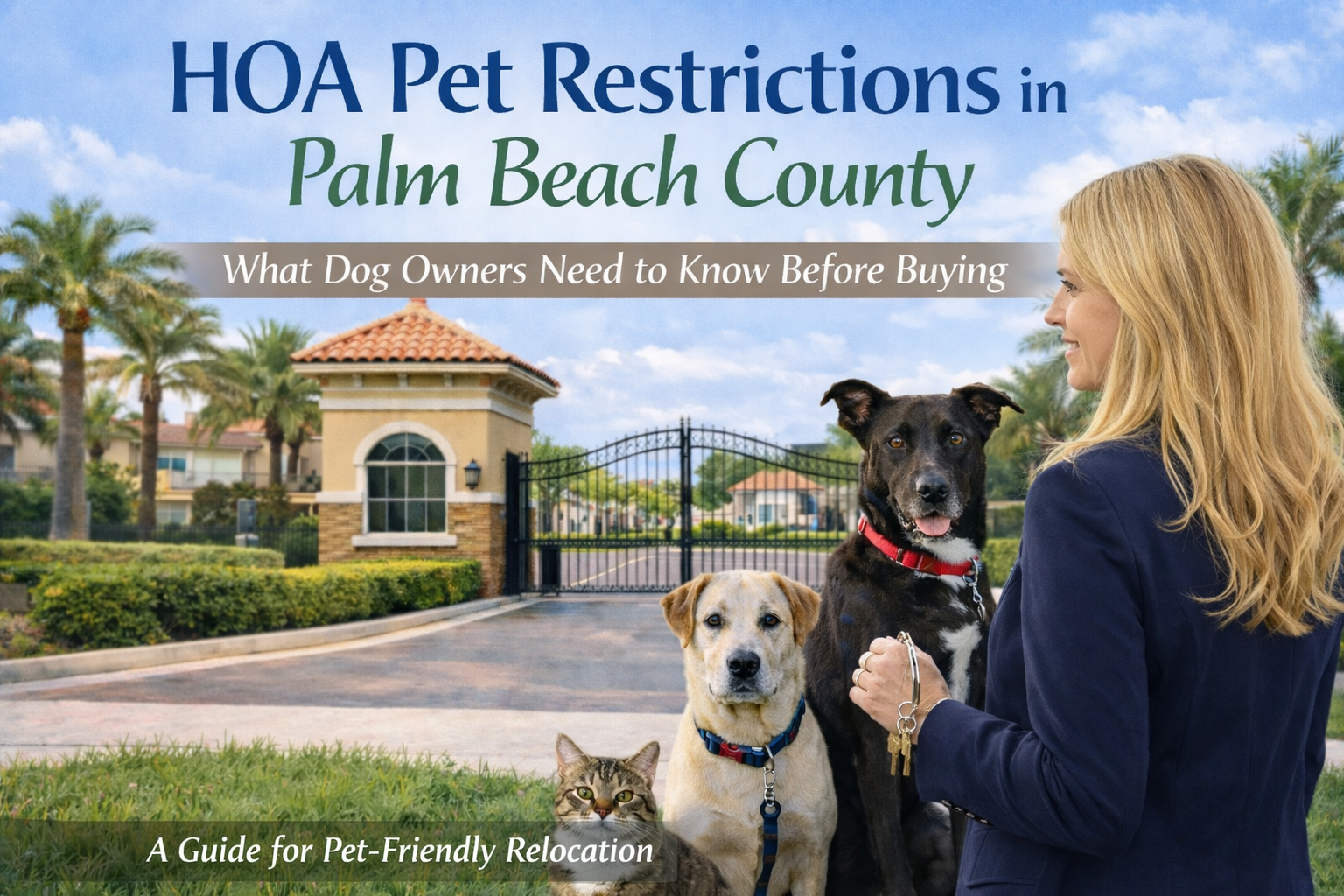
If you’re buying a home in Palm Beach County and you have pets, especially large dogs, HOA rules can make or break your move.
Many communities throughout Palm Beach County are governed by homeowners associations, and pet policies vary significantly from one neighborhood to another. Before falling in love with a property, it’s important to understand how these restrictions work.
Here’s what every pet owner should know.
Not All HOA Communities Have the Same Pet Rules
In Palm Beach County, HOA communities include:
-
Master-planned neighborhoods
-
Gated communities
-
Townhome developments
-
Condominium associations
Each has its own governing documents and pet policies. There is no universal standard. Some communities allow two pets with no weight limit. Others restrict pets to 25, 40, or 50 pounds. Some limit the number of pets. Some have breed restrictions. You cannot assume that what applies in one community applies in another.
Weight Limits Are Common
Weight limits are one of the most frequent restrictions in HOA communities.
Common limits include:
-
25 pounds
-
40 pounds
-
50 pounds
If you own a larger breed or rescue mix, this is critical to verify before submitting an offer. Some associations strictly enforce weight caps. Others may be more flexible, but relying on informal information is risky.
Breed Restrictions and Insurance Guidelines
Pet restrictions may appear in two places:
-
HOA governing documents
-
The community’s master insurance policy
In some cases, certain breeds may be restricted due to insurance requirements, even if the HOA rules do not specifically mention them. This is particularly important for buyers relocating with rescue dogs or breeds commonly affected by insurance guidelines.
Owner vs Tenant Pet Rules
In some Palm Beach County communities, pet rules differ between owners and tenants.
For example:
-
Owners may be allowed pets
-
Renters may face stricter limits or complete restrictions
If you plan to purchase and later rent out the property, this distinction is important to understand upfront.
Condo Associations Often Have Stricter Policies
Condominium buildings frequently have more restrictive pet rules than single-family HOA communities.
It is common to see:
-
One pet maximum
-
Lower weight limits
-
Combined weight and breed restrictions
If you are downsizing or considering a condo, reviewing pet policies early in the process is essential.
Always Review the Governing Documents
Before your inspection period ends, you should review:
-
Declaration of Covenants
-
Rules and Regulations
-
Any amendments or pet addendums
Policies can change over time. Verbal confirmations are not enough. Reviewing official documentation protects you from unexpected issues after closing.
Why This Matters in Palm Beach County
Palm Beach County has a high concentration of HOA-governed communities, along with evolving insurance standards and liability considerations. For pet owners, especially those with larger dogs, understanding these rules early prevents stress, conflict, and costly surprises.
Final Thoughts
Moving is a big transition. Ensuring your new community is a good fit for every member of your household, including your pets, should be part of the process from the beginning.
If you are relocating with pets in Palm Beach County and need guidance navigating HOA pet restrictions, I help buyers review policies before they commit to a property.
Joanna Maud
YourSpot @
Your home should work for your whole family.
Categories
Recent Posts









GET MORE INFORMATION

Pack Leader License ID: 2017002960